Sunday, 8 September 2019

In the hour of eclipse when the world went dark
several windows opened
in the squares of greenish luminescence
on this globe of earth making its diurnal rounds.
The shapes: squares, rectangles, circles, spheres, and planes...
all measurable with the mathematical certainty,
promised that the cosmos moved with predictability.
And all of a sudden in that dark hour
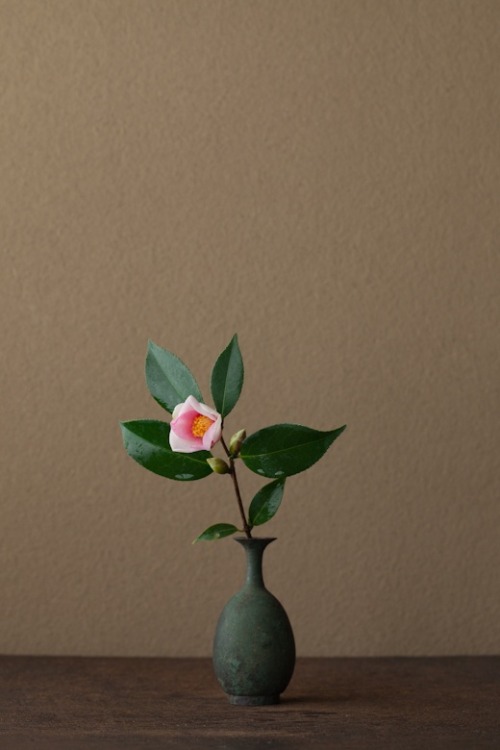
this single flower in the vase on my table
gained intuitive transparency.
It showed me all the delicate veins,
all the channels which carried the sap of life,
and the flower lived with a certainty.
What I thought was a fragility
was a life lived to its fullest possibility.
All its colors were encoded in the genes
and I listened to the subtle sounds of their harmony.
The cosmos embraced the flower and me.
That was the moment I felt I wasn't alone;
the flower and I were a part of the cosmic continuity.
SUSHAMA KARNIK (c)


Photo
Shared publiclyView activity

Saturday, 7 September 2019

Streets Evolve

Streets evolve
on a minor scale
like civilizations over centuries.
The line of beginning
 is always drawn
arbitrarily, some vague morning in childhood
when the idle child saw
a cat sitting on the fencing wall
meditative, silent, marginalized,
and the street flowing irrelevantly relaxed;
the cat and the street, tied up in a bond
of "Live and let live", and the world passed by
always ahead of the cat , the child and the narrow street.
Years pass by, the child grows up.
The cat is swallowed by the passage of time;
the street has grown, expanded in width;
it's noisy, chaotic and infinitely sad
at the peace and the shadows of palm-trees lost.
No cat basks in the morning sun.
The fencing wall is redundant now;
the sweet neighboring cottages are merged
 in one gigantic shopping-mall.

Friday, 6 September 2019

The rains are words,
but they don't speak;
they fall
like the dust, like ash,
like blossoms of fire,
like the breath withheld long.
The suddenness, frightening,
the lightning;
they are words
not meant to be heard.

Rains rush
into the empty swamps,
forlorn homes,
sweep away the wings of birds in the nests.

Rains fall
on herds of cows,
in the green meadows where the cows cannot reach,
on the mountain ranges,
everywhere the rains fall like words,
ruminations of thoughts,
rudimentary like the first stroke of a brush
on a canvas that does not speak.

words and the paint,
the paper and ink,
and the brush and the paint,
in a combat for ascendency,
for capturing the Zen.
In exhaustion,
the words freeze;
the paint waits
impatiently;
the canvas cracks like a barren land.

Nothing speaks in the land where the rains fall
like words,
like the dust of ashes and sand.
SUSHAMA KARNIK (C)
June 25, 2015

Friday, 30 August 2019


  • A bird comes often and sits
    on the cold window sill.
    Sitting on the outside
    it keeps looking in
    as if to say, " I can see through you;
    see your colors!"
    And so long as it sits there, I keep away from the window.
    because I know
    how it is with the birds in snow.
    I wonder if I open the window
    will the bird come in or fly away
    back to the sky in the winter gray.

    4d
  • Between the sips of the coffee in hand
    and reading the words blurred by the vapors on the screen
    the mind often wanders too far.
    It connects with a world with its own autonomy
    and comes back to reconnect with the world of words.
    How is that for widening the reading's horizon?
    Up and down,
    dark and brown,
    just like the coffee in my hand.


  • But I’m on the outside
    I’m looking in
    I can see through you
    See your true colors...
    Photo

  • But I’m on the outside
    I’m looking in
    I can see through you
    See your true colors...
    Photo


  • There is a reason
    why we often come to the sea
    offseason
    to feel the breeze,
    to gather the feelings that have no cause,
    the feelings that have been there, for no reason.
    We gather them suddenly one fine morning,
    put them in a bottle without a name
    to let them float out there with the tide,
    a nameless child
    out to create its own life.

    By Sushama Karnik
    Oct 21, 2017
    Photo
    Shared publiclyView activity

    In The War torn Days

    Jun 12, 2016
    In war-torn days they met
    when they did not know
    what to do with life
    which brought such love they could neither  take nor hide
    Her youth going to seed,
    eyes bulging with sleeplessness,
    and her hands...
    instead of let them hang by her side
    she gathered them and held close.
    "One day i will come," said he,
    "with heaps of currency notes
    and a dream-boat; wait for me."
    And she said okay.
    Years went by and one day she died.
    They put her in the coffin,
    her hands held close,
    one upon the other
    as on the day she mutely said,
    "Okay, I shall wait."
    Oskar Kokoschka
    Martha Hirsch (1909)

    Oskar Kokoschka 1886-1980

    Expressionist painter, draughtsman and lithographer of portraits, landscapes and figure subjects; author of several plays and other writings. Born at Pöchlarn, Austria, of Czech and Austrian parentage. Studied at the Vienna School of Arts and Crafts 1905-9. His early paintings and plays aroused intense antagonism, but he was befriended by Adolf Loos, with whose help he received his first commissions for portraits; also contributed drawings to the Berlin periodical Der Sturm. First one-man exhibition at the Galerie Paul Cassirer, Berlin, 1910. Badly wounded in 1915 serving on the Eastern Front. Moved in 1917 to Dresden and taught at the Dresden Academy 1919-24. From 1924 period of travel in Europe and North Africa; series of views of great European cities. After the rise of the Nazis, whom he always outspokenly opposed, he moved in 1934 to Prague, then in 1938 to England. Became a British subject in 1947. From 1953 lived mainly at Villeneuve in Switzerland. Ran a summer painting school, the Schule des Sehens (School of Seeing) at Salzburg 1953-63; designed sets and costumes for the theatre and the opera. His autobiography Mein Leben was published in 1971. Died in Montreux.

    Published in:
    Ronald Alley, Catalogue of the Tate Gallery's Collection of Modern Art other than Works by British Artists, Tate Gallery and Sotheby Parke-Bernet, London 1981, p.391

    ~ http://www.tate.org.uk/art/artists/oskar-kokoschka-1430

    . . . . .
    image from http://www.wikiart.org/en/oskar-kokoschka
    . . . . .
    #Art #OskarKokoschka
    . . . . .